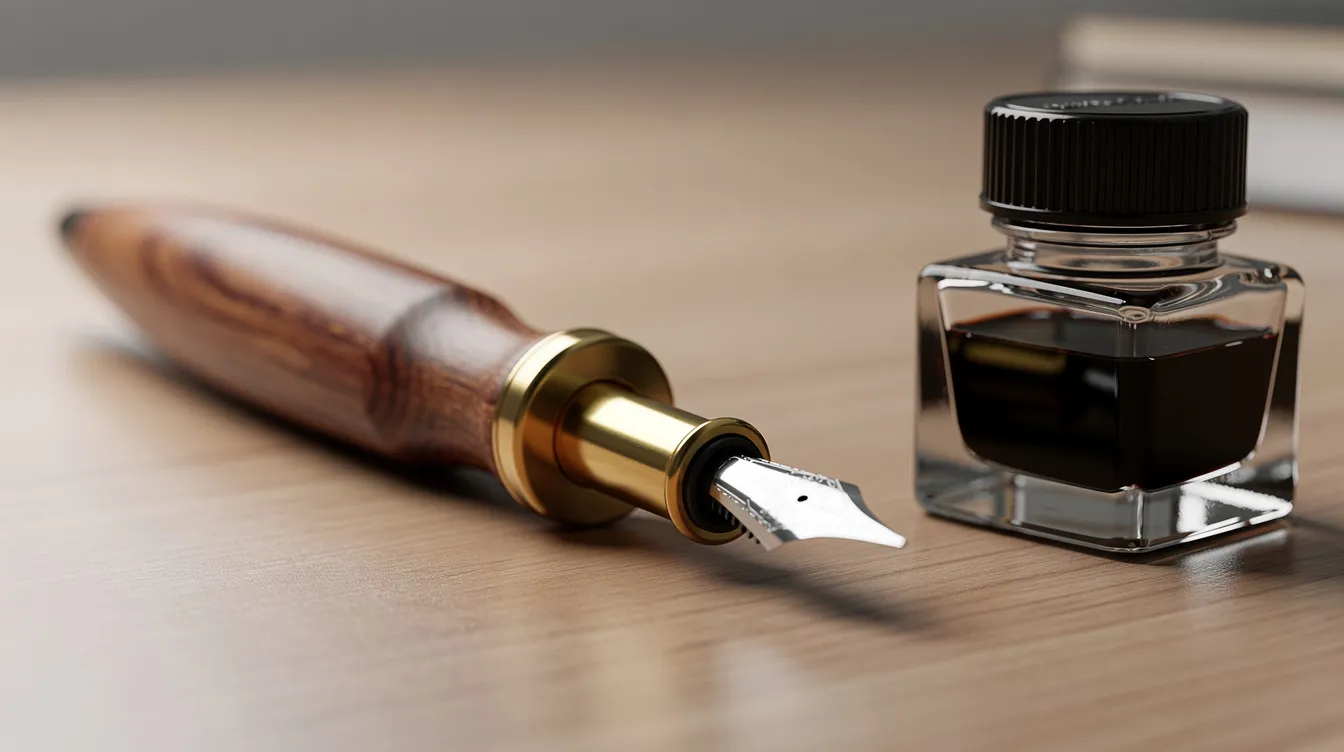

A dip calligraphy pen is a pen holder plus a removable metal nib, loaded with ink from a bottle each time. There is no reservoir or cartridge. You dip, you write a few strokes, and you dip again. The Wikipedia entry on dip pens covers the wider history of how these tools developed from quills to mass-produced steel nibs. I write Copperplate with an oblique holder, so this guide assumes a flexible pointed nib and notes where broad-edge lettering needs something different. These are my hobby notes after a lot of blotted pages, not a teaching manual, and the process is slow by design. For a fuller overview of the tool itself, read the dip pen entry on Wikipedia.
What I Look For in the Best Dip Pens
A straight holder seats the nib in line with the barrel. An oblique holder has a metal flange that offsets the nib to one side, keeping it aligned with a slanted script without twisting the wrist or rotating the paper at odd angles. For Copperplate, I find the oblique holder easier because the slant became consistent without effort, not because it looked fashionable. Plenty of people never need one; a straight holder is fine to learn on and costs less. Separate decorative appeal from practical usefulness when you read a product description or browse ads for handmade holders. A polished brass holder looks beautiful in a video, but a cheap wooden one that fits your hand writes the same letters.
Choose a Pen Holder for Pen Calligraphy
The flange on an oblique holder grips the nib at an angle so the tines face the slant line of Copperplate letters. If the flange is too wide or too shallow, the nib slips forward or rotates, and your shades lean to one side. Check that the tip of the nib lines up visually with the center of the holder.
My advice for beginners is a cheap straight holder first. Test the grip: a thin barrel suits some hands, while a thicker wooden or cork-wrapped one relaxes others. A holder that makes you clench produces shaky lines you will blame on your skill. The Manuscript Modern Calligraphy Oblique Pen Set is ideal for calligraphy if you want a ready-made oblique option to try later.
Calligraphy Dip Pens for Copperplate Practice
Pointed nibs create thin upstrokes and thick downstrokes by flexing under pressure. Broad-edge nibs create thick and thin lines based on the angle of the stroke instead. Copperplate uses pointed nibs. Dip pens accommodate a wider range of inks than fountain pens, because there is no internal feed mechanism to clog, and that is one reason calligraphy dip pens remain the standard tools for this art. Dip pens also offer maximum line variation compared to other calligraphy pens. If the flex mechanics are new to you, my notes on how a pointed pen flexes explain the basics.
Many Copperplate practice sheets set the slant at about 55 degrees. Starter sets that bundle a holder, a nib and a small ink bottle can save time, but I prefer buying items separately so I can test each piece. The Copperplate script article on Wikipedia gives a useful reference on how the letterforms are built and named, for anyone who wants background before picking up a pen.
Dip Pen Nibs for Thin Hairlines
Flexible nibs of dip pens can create thin and thick strokes across a wide range, and that contrast is the whole point of Copperplate lettering. A firmer nib narrows the range but forgives mistakes. A very flexible one rewards good pressure control and punishes heavy hands by catching on the paper, spattering, or tearing fibers. If you are unsure where to start, see which nib suits Copperplate before you buy.
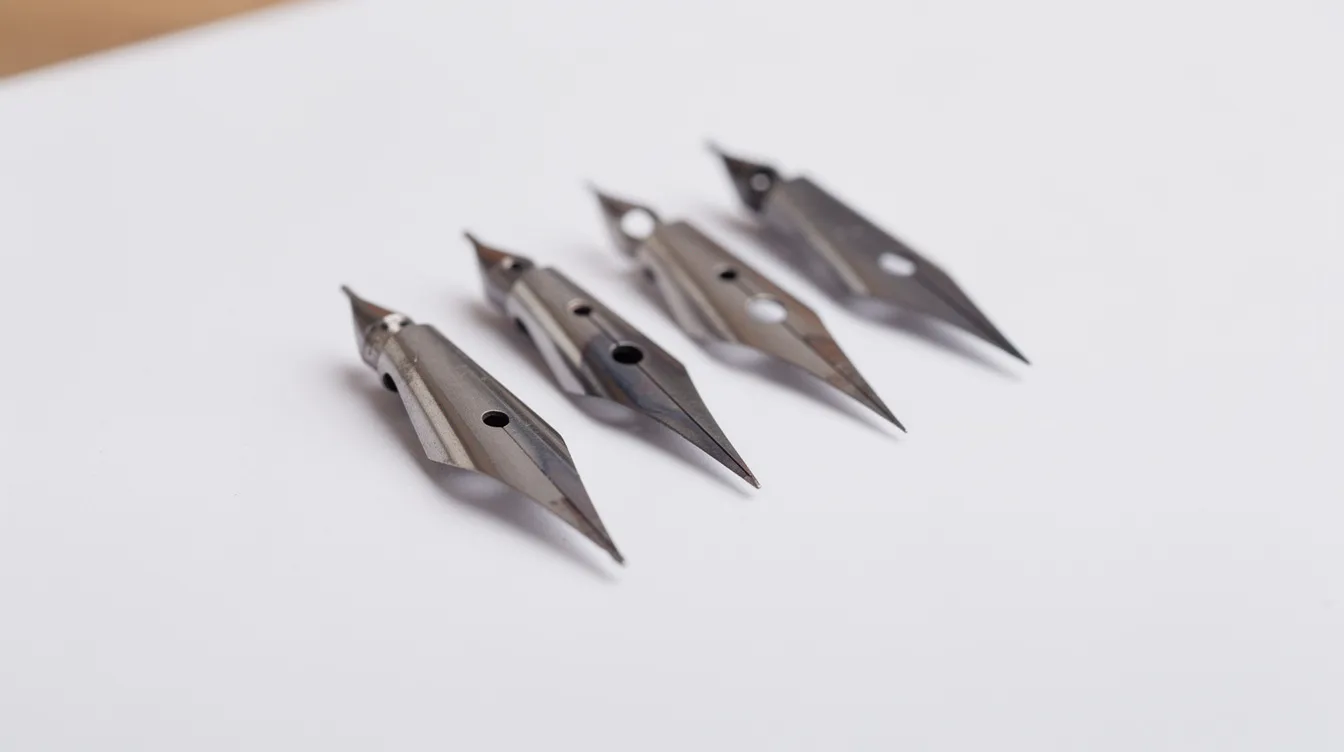
Beginners often want the finest, most flexible nib, which is usually a mistake early on. Different nibs create various line thicknesses in drawing and writing, so the nib you choose shapes every stroke. Signs a nib needs replacing: hairlines lose their fine edge, one tine fails to spring back, rust or pitting appears at the slit base.
Choosing Dip Pen Nibs
Dip pen nibs can be pointed, round, or broad, depending on the style. For Copperplate, pointed nibs are the standard. The G-pen nib is the most flexible among common dip pen nibs, which is worth knowing before you buy a set. Here is a comparison of a few nibs I keep coming back to:
|
Nib |
Flexibility |
Hairline Contrast |
Durability |
Holder Fit |
|---|---|---|---|---|
|
Nikko G |
Medium flex, forgiving |
Good contrast, slightly thicker hairlines |
Steel holds up well on most paper |
Fits standard G-nib oblique flanges |
|
Zebra G |
Softer than Nikko G |
Finer hairlines, sharper contrast |
More prone to catching; needs smooth paper |
Same holders; alignment more important |
|
Hunt 101 |
High flex, fine tip |
Dramatic swells, very thin hairlines |
Wears faster; sharp tip needs care |
Needs snug flange fit |
|
Leonardt Principal EF |
High flex, extra fine |
Finest hairlines; for controlled hands |
Degrades faster under heavy use |
Check flange width before purchase |
The Speedball Cartooning Pen Set is great for beginners who want to test several tip shapes at once; it includes four B-series nibs suited to illustration and sketching. The DELETER Trial Dip Pen Set is budget-friendly for manga artists. The Manuscript Leonardt Dip Pen Set includes five fine-pointed nibs for pen calligraphy and drawing. The Joseph Gillott Manga Dip Pen Set features two mapping pen nibs, which share similar technologies with pointed calligraphy nibs but are cut for finer detail work.
My recommendation: buy two or three different nibs rather than a big pack of one, and treat the first week as testing, not judging. Add a nib you are curious about to your cart next time you are browsing a website for supplies, and test it on your paper before forming an opinion. Once you have a short list, my notes on nib choice for Copperplate cover the trade-offs in more depth.
Pen Nibs for Shaky Downstrokes
Excessive pressure causes inconsistent downstrokes, and a very flexible nib magnifies every tremor in your hand. If your lines wobble, try a firmer nib like the Nikko G and slow your drills down. Apply pressure on the downstroke only; on the upstroke, the nib should barely touch the surface. Watching a live stream or video of someone doing slow drills helped me see how little force the downstroke actually needs.
Black Ink and Dip Pen Flow
Black ink beads up on a new nib because new metal nibs are coated with factory oil that must be removed before use. The oil reduces surface energy, so the ink forms droplets instead of wetting the metal. Paper coating can cause a similar problem on the other end. Ink flow and control are essential when using a dip pen due to its lack of internal reservoir; you have to manage what the nib carries.
Thin inks sink into the paper and spread. Very thick inks clog the slit or skip. I like a medium-bodied black ink that flows without pooling, and I test with a small bottle before committing to a larger purchase. Use specific ink formulated for dip pens for the best quality of line; fountain pen ink, for instance, is often too thin.
Making Ink Flow Better in a Dip Pen
Nib preparation is the first step. A clean, degreased nib picks up ink evenly. Dip so the ink covers the vent hole and no more, then touch the underside of the nib to the bottle neck to wipe the excess. Wiping the nib frequently helps to maintain clear lines while writing, and testing the first stroke on scrap paper catches blobs before they reach your practice sheet. Consistency varies between bottles and even between batches, so a small bottle for experiments beats a large one you are stuck with.
Glass Dip Pen or Traditional Dip Pens?
A glass dip pen stores ink in spiral grooves cut into the tip, which act as a temporary reservoir. Glass dip pens do not require nib replacements, since the tip is part of the pen. Herbin Round Glass Dip Pens are popular for calligraphy and drawing. The trade-off is weight: most glass pens feel heavier than a wooden holder, and they are fragile enough that one drop onto a hard floor can chip the tip.
When a Glass Dip Pen Makes Sense
A glass dip pen suits casual lettering, short writing sessions, and testing inks without cleaning a steel nib between colors. As a gift for someone curious about pen calligraphy, a glass pen is a good introduction. For Copperplate practice, though, the flexible steel nib is what creates shaded strokes, and a glass tip cannot replicate that. A paintbrush offers more variation than a glass nib when it comes to pressure-based contrast. If your goal is Copperplate, steel is the tool.
Quill Pen Options for Calligraphy
A quill pen is cut from a feather, and its flexibility and responsiveness differ from steel nibs. The historical appeal is real; Copperplate script itself descends from engraved copper plates of the 17th and 18th centuries, and quills were the writing tools of that world. But decorative quills sold in art supply shops are often rigid display pieces, not precision instruments for Copperplate strokes. If you want to join the community of creatives who use traditional materials, learn to cut and shape a quill yourself; otherwise, a modern steel nib in a wooden holder does the same job with less maintenance.
Preparing a New Calligraphy Nib
New metal nibs are coated with factory oil that must be removed before use. Without this step, ink beads up and refuses to flow. Rub the nib with mild dish soap or a dab of rubbing alcohol. Another method: press the nib into a raw potato for ten to fifteen minutes, since the starch absorbs the oil. I skip the flame method because holding a nib in a lighter for even a moment too long can soften the metal and change how it flexes. Rinse, dry, and seat the nib firmly and straight in the holder. A crooked nib opens its tines unevenly and shades lean to one side, which is a sign something is wrong before you even write a letter.
Dipping a Pointed Nib Without Blobs
Dipping a pointed nib requires practice to avoid blobs. The ink should cover the vent hole and no more. Touch the underside to the bottle neck, then make a test stroke on scrap paper. Dip pens require frequent dipping into ink for writing; re-dip whenever the line thins, which can be every few letters. I remember spending an afternoon three years ago fighting blobs before realizing I was dipping the nib halfway up the barrel.
Paper Choices for Dip Pen Calligraphy
Using smooth, heavy paper helps prevent feathering and catching nib tines. Coated or sized paper slows ink spread; absorbent, rough paper lets ink bleed into fibers, which ruins fine hairlines. I find that smooth paper rated at 120 gsm or above, like Rhodia pads or HP Premium 32 lb, gives a better experience for pointed pen work. A slant and x-height guide sheet under the page is the quiet reason my letters became more consistent.
Testing Paper Before Daily Practice
Before committing to a ream, write a short sample: hairlines, swells, ovals. Check how crisp the hairlines are, how fast the ink dries without smudging, and whether the reverse side shows bleed-through. This quick test saves money and frustration. Click around Jackson’s or any art materials site and read the paper weight and smoothness before you add a pad to your cart.
Daily Practice With a Dip Calligraphy Pen
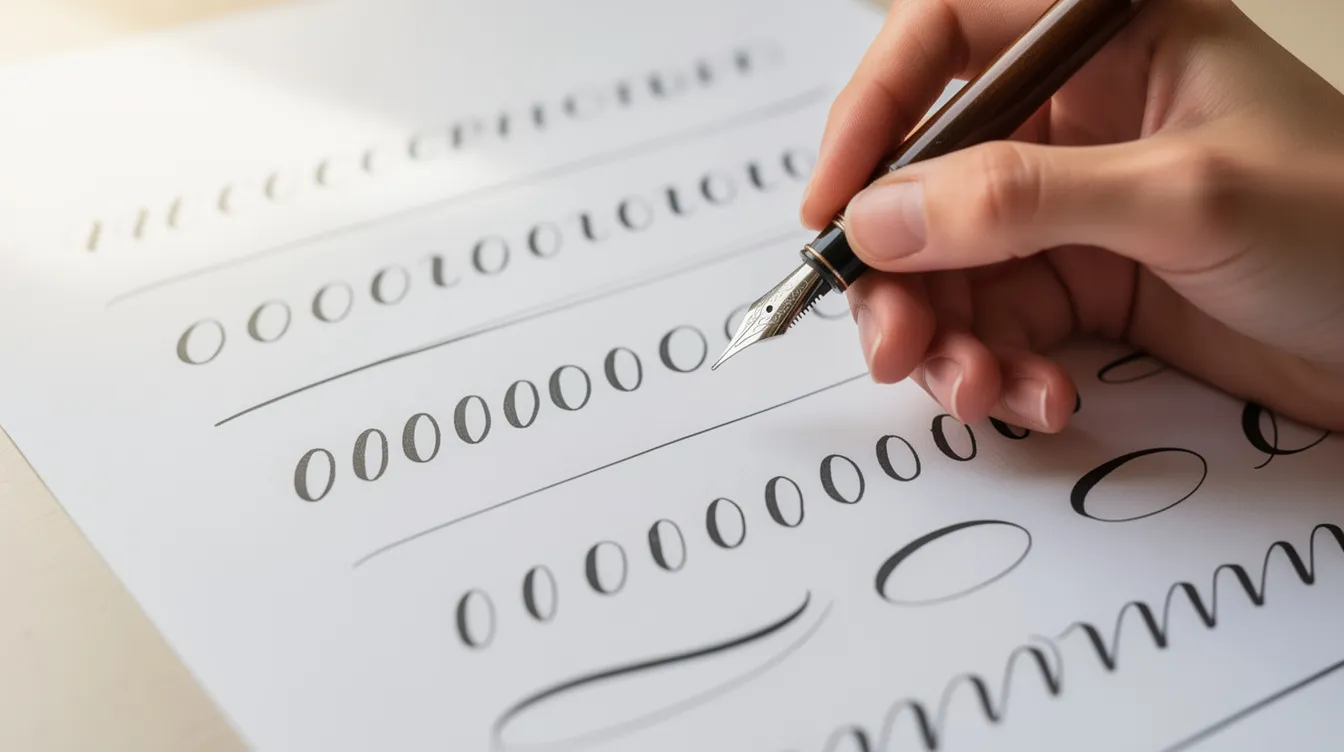
Beginners should practice basic strokes before writing full letters. Start each session with shaded downstrokes, hairline upstrokes, ovals, and the compound curve. Heavy downstrokes require firm pressure while light upstrokes require little pressure; pushing upward with force is how nibs catch and spatter. Proper technique with dip pens requires maintaining a 30 to 45 degree nib-to-paper angle, which keeps ink flowing and tines aligned. Twenty or thirty minutes of focused drills beats an hour of tired scribbling. Jot observations after each session. Students and hobbyists who do this improve faster because they learn from their own notes, not just from content they read online. Once the strokes feel steady, look at which letters to practice first.
Finding a Comfortable Copperplate Slant
A printed slant guide under the page keeps letter angles consistent. Compare the visual slant of your letters with the guide constantly, because drift happens without you noticing. Adjust the paper position gradually until your hand and holder find a natural angle. I avoid presenting one angle as perfect or universally correct; the ideal slant is whatever you can repeat stroke after stroke. Some people set it at 52 degrees, some at 55. The design of the holder and flange affects this too.
Fixing Common Dip Pen Problems
Beading ink points to nib preparation; go back and clean the nib. Blobs point to over-loading; dip less deeply and wipe the underside. Shaky lines point to grip tension, fatigue, or a nib that is too flexible for your current control. Swapping a worn nib often fixes a problem you would otherwise spend a week blaming on yourself.
When Hairlines Look Too Thick
Check nib cleanliness first. Reduce pressure on upstrokes. Compare the nib’s flexibility with the line you want; a limp, worn nib cannot create a sharp hairline. Try smoother paper before replacing the nib, since rough fibers spread the ink sideways.
When Downstrokes Feel Uneven
Slow down for diagnostic practice. Check whether the nib catches the paper by comparing drag across two or three paper samples. Fatigue is a possible contributor; if the wobble appears after fifteen minutes but not at the start, rest your hand and come back.
Cleaning Calligraphy Dip Pens After Use
Clean dip pen nibs immediately after use. Use warm water to rinse dip pen nibs, and avoid using harsh chemicals on dip pen nibs. Dry dip pen nibs thoroughly before storage, and store dip pen nibs in a dry place to prevent rust. Dried ink corrodes metal and clogs the slit, shortening nib life. I take the nib out of the holder when I finish a session and leave it on a dry cloth. The security of knowing your nibs are stored properly means fewer surprises when you sit down to practice next.
How Long a Pointed Nib Lasts
Watch for these signs: hairlines that used to be sharp now look thick, tines no longer snap back into alignment, rust or pitting appears at the slit. Corrosion looks different from ink residue; residue wipes off, corrosion stays. Loss of flexibility is a clear replacement signal. Nibs are cheap, so replace a rusted or bent one rather than fight it. I keep a small piece of cloth in a tin with spare nibs so moisture does not collect.
My Dip Pen Starter Setup
One cheap straight holder. A few different sturdy nibs: Nikko G, Zebra G, and a Hunt 101 for later. A medium-bodied black ink in a small bottle. Smooth paper at 120 gsm or above, and a printed guide sheet with slant lines. A heavy, wide-based ink bottle, because knocking over a full one is a rite of passage I would happily have skipped. Keep a jar of water, a cloth, and scrap paper to hand. This kit covers everything for the first several weeks without spending much. If you google “dip pen starter set,” you will find pre-made options too, but picking each item teaches you what matters.
Questions I Ask Before Choosing
Does the holder accept pointed nibs? Does the nib suit Copperplate? Does the ink match the paper? Does cleaning feel manageable? If the answer to any of these is no, I stop and swap that one piece before changing everything else. These questions apply whether the item costs two dollars or fifty.
Final Notes on Choosing a Dip Calligraphy Pen
Decorative tools look good on a shelf. Practice tools look good on the page. The best dip pens are the ones that let you write, learn, and share what you notice, not the ones with the highest price or the prettiest handle. Record your own ink experiments, note which paper fought back, and read your own observations a week later. The small fixes add up. Calligraphy with a dip pen is slow work, and that is the whole point.
FAQ
Do I need an oblique holder to start? No. A straight holder is fine for learning. I moved to oblique for a more repeatable slant, but many people create consistent Copperplate letters with a straight holder their whole practice.
Why does my ink bead up and skip on a new nib? The protective factory coating repels ink. Clean it with mild soap, rubbing alcohol, or press the nib into a raw potato. Rinse, dry, and check the nib is seated firmly.
Why does my nib spatter or catch on the paper? Usually pressure on upstrokes or rough paper. Lift pressure going up, use smoother paper, and try a sturdier nib.
How often should I re-dip? Often. Whenever the line thins or looks dry, which can be every few letters depending on the nib and ink.
Which ink is best for a beginner? A medium-bodied, smooth-flowing calligraphy ink, tested on your paper, in a small bottle first. Avoid metallic or heavily pigmented inks until you have the basics steady.