
A pointed pen is one of those tools that looks simple and then humbles you the moment ink meets paper. I have been practising Copperplate calligraphy with an oblique holder for a while now, and these are my notes on what a pointed pen actually is, how it differs from the other pens in a drawer, and what I have noticed about making it work.
What I Mean by a Pointed Pen
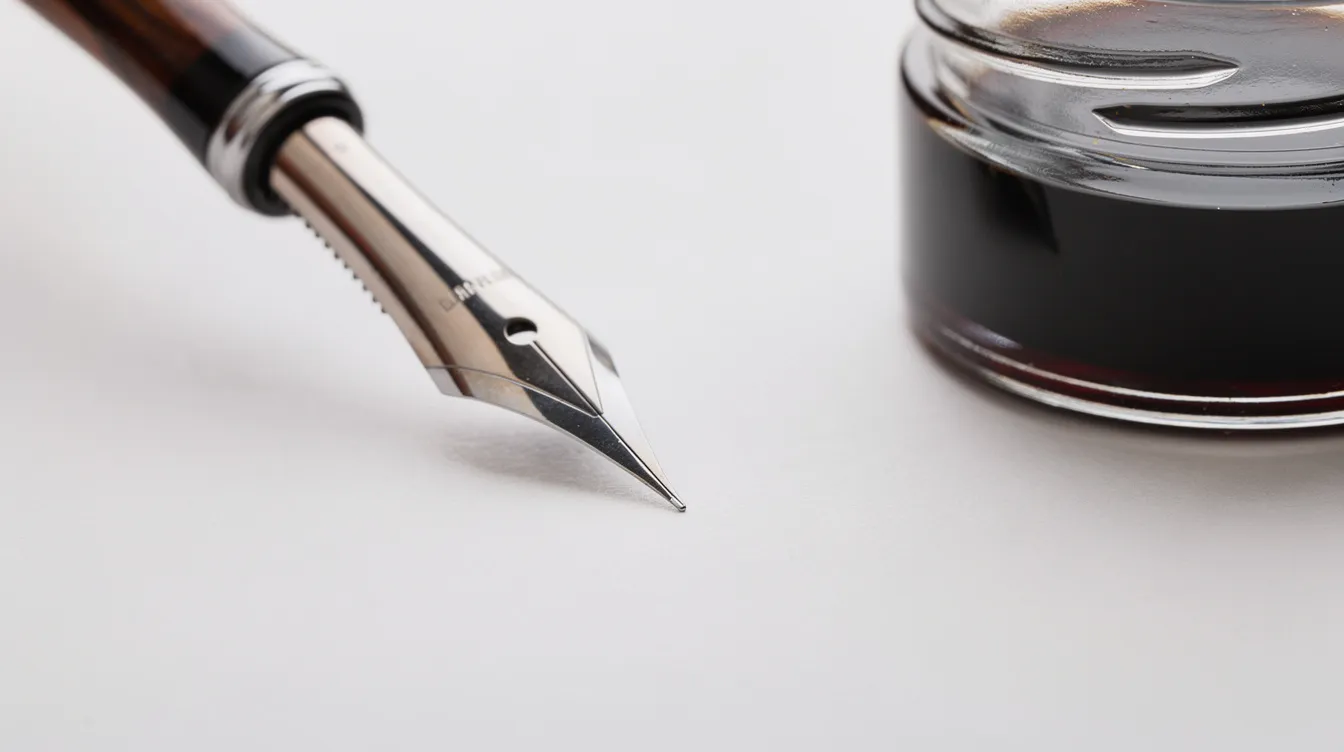
A pointed pen is a dip pen fitted with a sharp, flexible metal nib. The nib is split into two tines, and those tines are the whole story. Press down on a downstroke and the tines spread apart, letting ink fill the gap to create a thick shade. Lift the pressure on an upstroke and the tines close, producing a hairline so thin it almost vanishes. Pointed pens create contrast through pressure rather than the shape of the nib, which is what separates them from broad-edge tools.
Maintaining a light touch is essential for using a pointed pen effectively. The pen does not reward force. Applying pressure only on downstrokes is critical for creating thick lines, and the upstroke should feel like the nib is barely grazing the paper. Pointed nibs create precise and delicate lines in calligraphy, and the result is expressive lines that shift from thick to thin inside a single letter.
Pointed pen calligraphy often uses classic styles such as Copperplate and Spencerian. I write Copperplate with an oblique holder, and most of what I know came from slow, slightly messy practice at the kitchen table. Brush pens are simpler to start with than pointed pens, and brush pens allow for more dynamic and colorful styles, but pointed pen calligraphy offers more elegant effects than brush pens once you build the control. The distinction matters: a brush tip bends and recovers in a continuous way, while a pointed nib has a brittle snap as the tines open and close. The dip pen entry on Wikipedia is worth a read for anyone who wants a broader overview of how metal nibs developed.
Pointed Pen, Fountain Pen, or Gel Pen?
Fountain pens use a metal nib and an internal ink reservoir, so they can write for pages without stopping. A pointed dip nib holds only a tiny film of ink and runs dry after a few letters. Pointed pen nibs need to be dipped into ink regularly, which is part of the rhythm but also part of the mess.
Rollerball pens combine fountain pen ink flow with cartridge simplicity. Ballpoint pens use thicker, faster-drying ink for everyday use. Gel pens offer vibrant colors with a smooth, low-friction glide, and fine-line Microns are known for their precise, delicate lines. Felt tips and products from makers like Pentel are fun for sketching and drawing, but none of these give the pressure-driven line variation a dip pen does.
Brush pens sit somewhere in between. They produce thicker and thinner strokes, but the feel and the range of control differ from a pointed nib. For calligraphy that needs to look sharp and consistent, the dip pen is still the tool I reach for.
My First Fountain Pen Versus a First Pointed Pen
A first fountain pen arrives more or less ready. Buy it, fill it with a cartridge or bottled ink, pick up paper, and start writing. The simplicity is real.
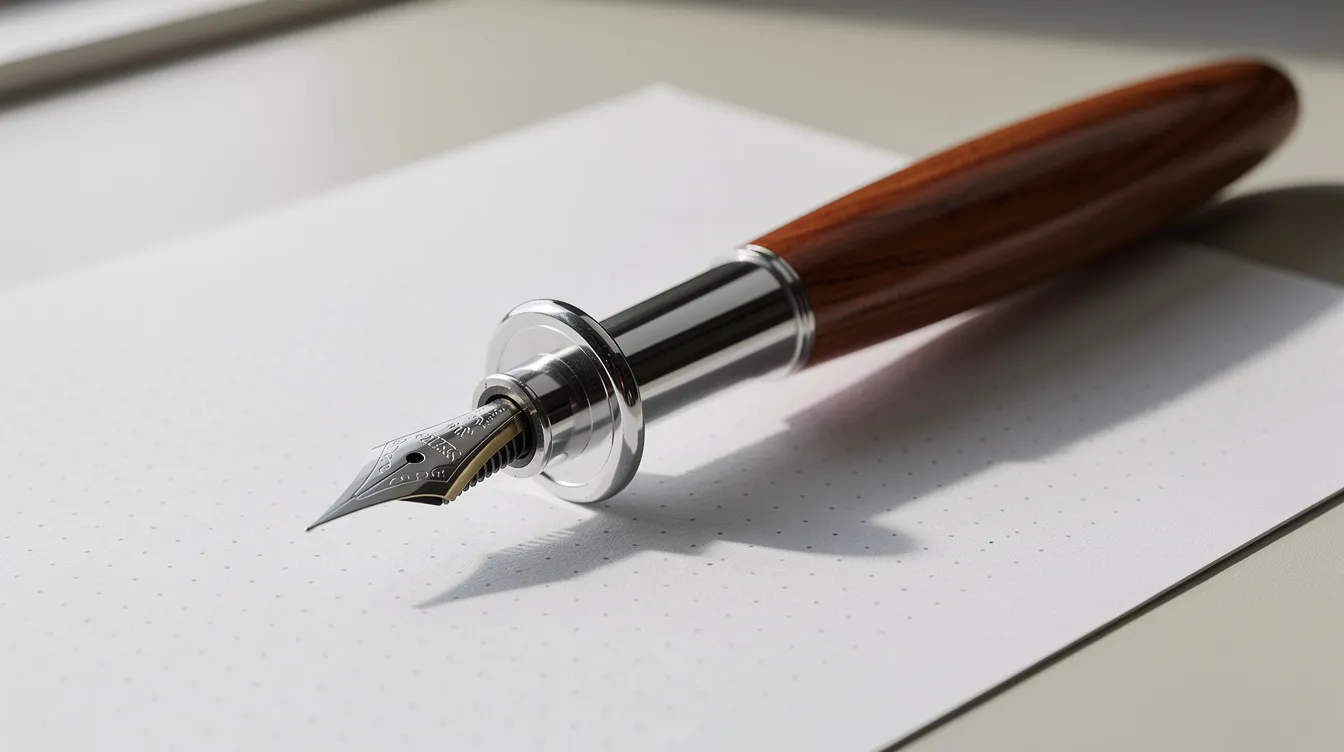
A first pointed pen kit is different. Pointed pens require a pen holder, nib, and ink. You also need smooth paper, a slant guide, and a jar of water for cleaning. The holder can be straight or oblique. The calligraphy nib slots into the holder’s flange or friction fit, and you are responsible for every part of the chain: ink consistency, nib prep, paper choice, and your own hand.
The learning curve is honest. The press, release, press, release rhythm feels like patting your head while rubbing your stomach for a while. Nobody gets beautiful letters on day one. A short daily sit-down beats a long weekly one, and I have found that even fifteen minutes of drills moves the needle more than an hour once a week.
Choosing an Oblique Holder and Pointed Nib
I prefer an oblique holder for Copperplate because the slant, traditionally around 55 degrees, becomes a matter of setup rather than constant wrist correction. The flange holds the nib at an angle to the left, and my letters have been more consistent since I made the switch. The angle of the nib affects the stroke and line variation in pointed pen calligraphy, and an oblique holder takes care of much of that for you.
That said, it is not required. English round hand, the style Copperplate descends from, was written long before flanged holders existed. Plenty of people use a straight holder and turn the paper to get the slant. The oblique holder is a convenience, not a rule.
What beginners may notice in holder shapes:
-
Weight and balance: heavier holders can steady your hand, lighter ones tire it less
-
Flange type: some accept only certain nib sizes; universal flanges save trouble when buying nibs
-
Grip diameter: thicker grips tend to reduce finger cramping over a session
Different nibs have varying flexibility, which affects stroke thickness. Start with a firmer nib. A very flexible nib exaggerates every wobble, and beginners may benefit from using firmer nibs to avoid ink blobs while learning. Something like a Nikko G is a common starting point. Choosing and using a dip pen is a broader subject, and there is plenty to explore once the basics feel steady.
Preparing a New Calligraphy Nib
New nibs ship with a factory coating, usually a thin oil or lacquer, to prevent rust in storage. That coating makes water based ink bead up on the metal instead of flowing. If ink does not stick to the nib after a first dip, the coating is almost always the reason.
I stick to soap and water rather than flame or potato. A damp cloth or a soft toothbrush with a little dish soap, rubbed gently over both sides of the nib, does the job. Rinse, dry, and dip. If ink still beads, repeat.
Before dipping, I hold the nib up to a light and check that the two tines meet evenly at the tip. If they are misaligned, hairlines will be uneven and ink may skip. A sign that preparation needs repeating is when ink pools on top of the nib rather than wetting the underside.
Dipping a Pointed Nib Without Blobs
I dip the nib just past the breather hole, the small round hole stamped into the nib’s body. That hole is part of the reservoir system, and dipping to that depth gives enough ink for several strokes without overloading.
After dipping:
-
Tap the nib lightly against the jar rim or wipe the excess on the edge
-
Wiping excess ink from the nib helps prevent blobs on paper
-
Watch the first stroke before continuing; if a blob forms, the nib is still carrying too much
Common causes of oversized ink deposits include overloading the nib, using ink that is too thin (water based ink that floods), or holding the pen too upright so gravity pulls a pool to the tip.
Making Ink Flow Better in a Dip Pen
Ink beads up on the nib for two main reasons: leftover factory coating, or ink whose surface tension does not agree with the metal. If the nib is clean and ink still misbehaves, the ink itself may be wrong for dip use. Ordinary fountain pen ink is often too thin to grip the nib. Calligraphy inks, sumi ink, and gouache thinned with a little water all have a place, and I keep a bottle of gum arabic nearby to add a drop when things get stubborn.
Paper surface affects ink movement too. Very smooth paper lets hairlines stay crisp. Rough or fibrous paper catches tines on upstrokes and can cause ink to bleed or spatter. When dilution changes ink consistency, hairline quality shifts with it, so I adjust in small steps and test on the same paper I plan to use.
Paper, Slant, and Thin Hairlines
Smooth paper is recommended for pointed pen calligraphy to avoid snagging. Coated pad paper or hot-press stock lets the nib glide, while cold-press or cheap copy paper fights back with fibres that catch on upstrokes. Pointed pens can produce thin hairlines with proper technique, but those hairlines break apart on rough surfaces.
The nib must be at a consistent angle to the paper for best results in calligraphy. I use guideline sheets printed at the slant angle and taped under my practice page. Those lines do more for consistency than almost any other tool I have tried. Pointed pen calligraphy requires practice for consistent slant, and the guidelines save me from having to Google solutions to drift.
Shaky downstrokes usually come from inconsistent pressure changes. Slowing down helps. I aim for roughly the speed of walking through a quiet library. Breathing steadily and reducing wrist tension also makes a difference.
Daily Pointed Pen Practice and Nib Care
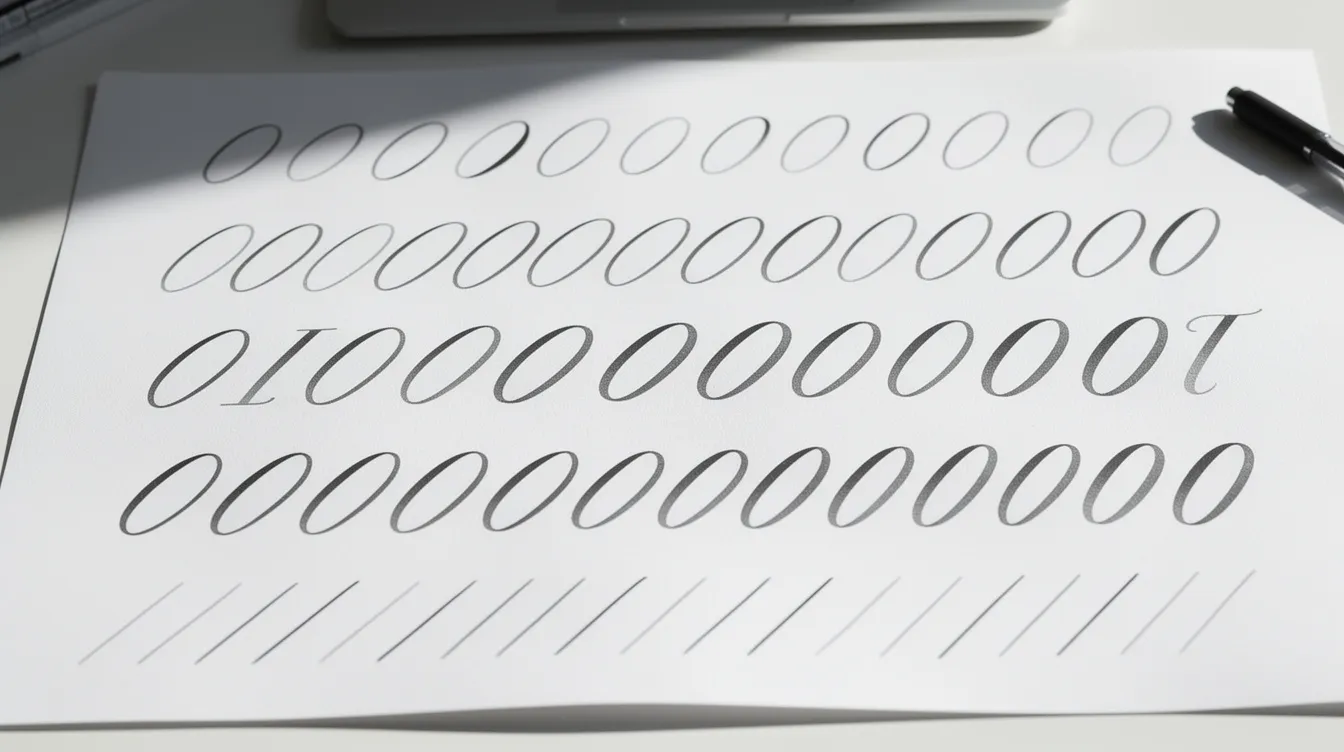
My routine starts with drills, not letters. Light slanted lines first, then shading with release on downstrokes, then ovals and push-pull rows. Only after those warm-ups do I attempt any form of letter. The entry strokes, where you start at the point and draw down before curving up, set the tone for everything that follows. I focus practice on repeated entry strokes because they expose every inconsistency.
For readers who have steadied their drills and want to know what to learn next, exploring which Copperplate alphabets to practise first is a good next step. Lowercase before uppercase is the order I follow. New to the script itself? Read a beginner’s guide to Copperplate first.
I assess nib wear by saving sample letters in January and comparing them a few weeks later. Signs of wear include permanently splayed tines, hairlines that thicken even with light pressure, and a tip that starts to snag. At that point it is time to choose a fresh nib.
Cleaning and maintaining the nib after each use prevents rust and ensures performance. After every session I rinse the nib in water, wipe it dry with a lint-free cloth, and store it somewhere it will not rattle around. If I have been using pigmented or waterproof ink, I clean a little more thoroughly with soap.
FAQ
What is a pointed pen used for? It is used for scripts that need contrast between thick and thin strokes: Copperplate, Spencerian, Engrosser’s Script. Pointed pens are ideal for elegant wedding calligraphy, envelope addressing, ornate labels, and fine-line art. Pointed pens are better for precise wedding calligraphy than most other hand tools.
Is a pointed pen the same as a dip pen? Mostly. A pointed pen is a subtype of dip pen. The term refers specifically to the flexible, sharp-tipped nib, as opposed to a broad-edge dip nib. Both require dipping; the difference is the nib shape and the kind of writing each is built for.
Do I need an oblique holder to start? No. A straight holder works. Many people turn the paper instead and get excellent results. An oblique holder makes a certain slant easier to maintain, but it is not a requirement to join in and start.
Why does my ink not stick to the nib? Almost always the factory coating. Clean the nib with soap and water. If that does not work, the ink may be too thin, or finger oils may have returned to the surface. Try a different ink or re-clean.
How long does it take to get comfortable with the pen? Many people report noticeable improvement after a few weeks of short daily practice. Getting consistent hairlines, even slant, and smooth transitions takes longer, sometimes months. The pen rewards patience, not speed, and every session adds something even when it does not feel like it.